Showing posts with label caldecott. Show all posts

Thursday, January 12, 2017

Caldecott Essay Requirements

Once you have finished reading through the Caldecott contenders, when you have made your choice, begin crafting an essay about the book you have selected, including the following:

  1. Mention the title, author, and illustrator of the book at the beginning of the essay
  2. A short summary of the story
  3. Thesis statement
  4. A description of the artwork (think about art terminology you have learned with Mrs. Ackley over the years: use of color, lines, brush strokes, etc.)
  5. Cite the Caldecott criteria by explaining why you consider your selection to be "the most distinguished," how the illustrations help interpret the plot, why the artistic techniques used are superior to the other books, etc.
  6. Cite a professional review or quote the author/illustrator* 
  7. EXTRA CREDIT: Insert a picture of the book cover at the top of your essay (1 point)

Here is an example of the writing I did for my favorite 2014 Caldecott pick, Journey by Aaron Becker:

Mrs. Shaum's pick for the 2014 Caldecott: Journey by Aaron Becker
(Note: This is my selection for the Caldecott from three years ago so as not to have my opinion influence your choice)

When a young girl is desperate for some attention from her family but they appear to be too wrapped up in their own lives to notice her, she draws herself into an imaginary land and can get herself out of any predicament with just a few lines drawn from a magical red crayon, invoking a nod to the classic children's book, Harold and the Purple Crayon by Crockett Johnson

Journey by Aaron Becker is an absolutely stunning, heart-skipping wordless picture book that deserves to win the 2014 Caldecott medal. It will make you gasp at its beauty and feats of imagination.
What is so captivating about this picture book is the variety of influences you see in Becker's art, namely the Eastern influences, especially on the first full page spread where our protagonist enters the land of her imagination and you see paper lanterns strewn about the forest. That spread will make the reader's eyes bulge in wonder and heart skip a beat at the awe-inspiring transition from a colorless, depressing world to an adventurous, fantastical one. In going from one world to the next, the reader experiences a delightful, soul-stirring surprise. 

To examine Becker's art further and noting why it should be considered distinguished, one merely has to look at the level of detail in his pen and ink/watercolor illustrations. In poring over the architectural marvels Becker created in this book, one would almost assume he had a background in architecture, and yet, his illustrations are so fantastical that his artistic abilities are likely too whimsical and outlandish to be of any practical use in the field of architecture.

In considering Becker's level of detail in the setting, one also has to consider another curiosity in his artwork and that is the lack of detail in the faces of the people he draws, namely the little girl who goes on this journey. This could be cause for criticism, however, I see it more as the artist's way of not imposing this journey on any one person -- it is, in essence, all of our journeys. 

As a wordless picture book, Journey has all the things the Caldecott committee is looking for: excellence of artistic techniques, the use of illustrations to tell a story, timelessness, and appeal to a child audience. Becker himself says that the perfect audience for this book is a child who is "curious...inquisitive and maybe someone who's a little quiet and can have that time to themselves to look through something and find the details." And I have to say, those are all qualities of a really great Caldecott judge as well. 


*Places to find professional reviews:
Kirkus
The Horn Book
School Library Journal
The New York Times
Publisher's Weekly

Tuesday, February 24, 2015

Revising your Caldecott Essay


Even if you received a good grade on your essay, there is always room for improvement, so I ask that everyone find a way to revise your essay.

Here are the steps you need to take to revise your essay:

1. Unsubmit your essay.
2. Review your grading sheet and comments
3. Make appropriate revisions
4. Resubmit your essay.

Most of you lost points in the referencing the Caldecott criteria. Remember: it's not enough to have an opinion; you have to back it up with relevant evidence. Most of you turned in a nice piece of writing, but when it came to actually following the directions of the assignment, you missed out.

Here are a few sentence starters that you can use to reference the criteria in your paper:
  • According to...
  • As it states in...
  • It is written in...
  • The Caldecott criteria states...
  • The Caldecott committee is looking for...


And finally, as a reminder, here are the criteria again. Remember that the main criteria you will be using to judge your picture book worthy of winning are letters a through e. 

*~*~*~*~*~*~*~*

The Randolph Caldecott Award seeks to find "The most distinguished American picture book for children."

But just what does distinguished mean?

Distinguished: (adjective) made noticeable by excellence; having an air of distinction or dignity

In making your decision you must keep this in mind: the Caldecott is awarded for illustration, not for text. You may only consider text only if it detracts from the illustration.


Here is the Caldecott critera from the ALSC website (I re-worded some of this to help you better understand the criteria):


  1. In identifying a “distinguished American picture book for children,” defined as illustration, committee members need to consider :
    1. Excellence of execution in the artistic technique used
    2. Excellence of interpretation of story, theme, or concept through pictures
    3. Appropriateness of style of illustration to the story, theme or concept;
    4. Understanding of plot, theme, characters, setting, mood or information through the pictures;
    5. Excellence of presentation in recognition of a child audience.
  2. The only limitation to graphic form is that the form must be one which may be used in a picture book. The book cannot be dependent on other media (i.e., sound, film or computer program) for its enjoyment.
  3. Each book is to be considered as a picture book. The committee is to make its decision primarily on the illustration, but other components of a book are to be considered especially when they make a book less effective as a children’s picture book. Such other components might include the written text, the overall design of the book, etc.

Wednesday, February 4, 2015

Look at all the award-winning books we have read and talked about!

I feel so lucky that I was able to attend the ALA Youth Media Award ceremony in Chicago on Monday.  If you want to watch it (at home), here is the recording on YouTube:


Or you can read the press release

One thing struck me after the ALA Youth Media Award ceremony was over was how many of the award-winners we have read, talked about, or have in our classroom. Check it out:


YALSA Award for Excellence in Nonfiction for Young Adults (finalist):

The Port Chicago 50: Disaster, Mutiny, and the Fight for Civil Rights by Steve Sheinkin


Odyssey Honor (audiobook award):

A Snicker of Magic by Natalie Lloyd


Coretta Scott King Awards:

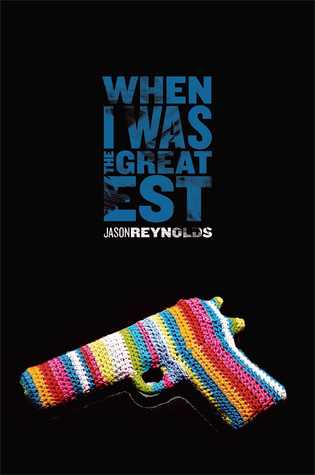
When I Was the Greatest by Jason Reynolds
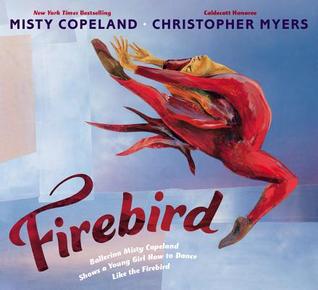
Firebird by Misty Copeland, illustrated by Christopher Myers
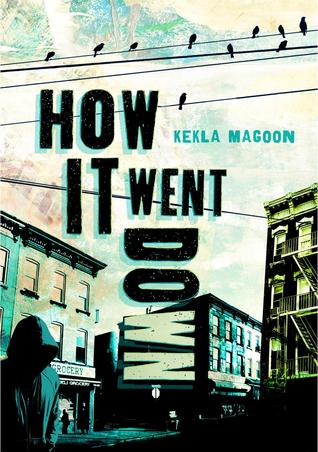
How It Went Down by Kekla Magoon


Caldecott 

Honors:

Nana in the City by Lauren Castillo
Viva Frida by Yuyi Morales


The Noisy Paint Box by Barb Rosenstock, illustrated by Mary GrandPre
Sam and Dave Dig a Hole by Mac Barnett, illustrated by Jon Klassen
The Right Word: Roget and His Thesaurus by Jen Bryant, illustrated by Melissa Sweet


Caldecott Winner:
 
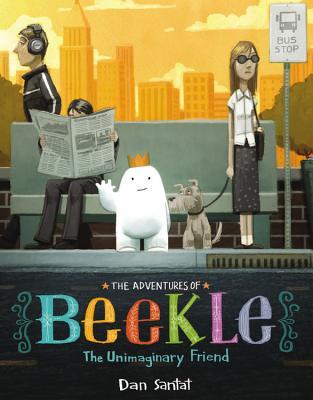
The Adventures of Beekle by Dan Santat


And finally, the Newbery...

Honors:

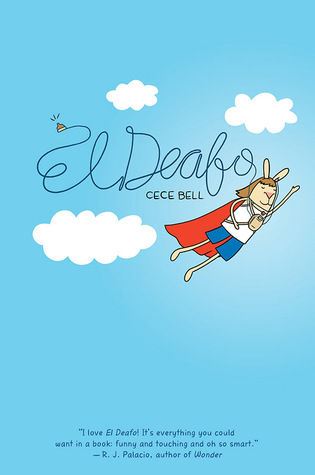
El Deafo by Cece Bell
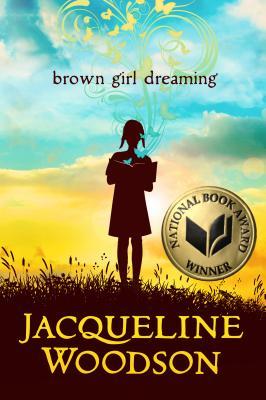
Brown Girl Dreaming by Jacqueline Woodson

Winner:
 
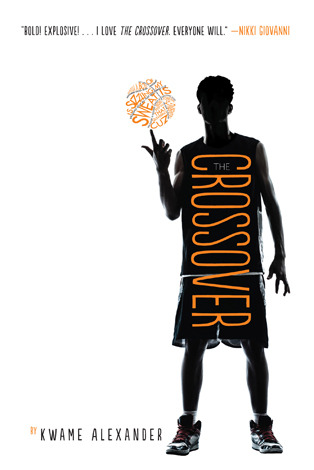
The Crossover by Kwame Alexander

Tuesday, January 29, 2013

3rd quarter extra credit: Newbery/Caldecott Challenge

For those of you looking for a challenge in your reading, for extra credit, you can do one of the following:

1. Read one of the 2013 Newbery honor books and write a review of it in your literature journal, explaining why you think it is worthy of a Newbery honor.

The 2013 Newbery honors are:


2. Read the 2012 Newbery winner, Dead End in Norvelt by Jack Gantos and then write a review of it in your literature journal, explaining why you think it is worthy of a Newbery award.

3. Read ALL of the 2013 Caldecott honor books and write a review of them in your literature journal, explaining why you think they are worthy of a Caldecott honor.

The 2013 Caldecott honors are:
  • Creepy Carrots! illustrated by Peter Brown, written by Aaron Reynolds
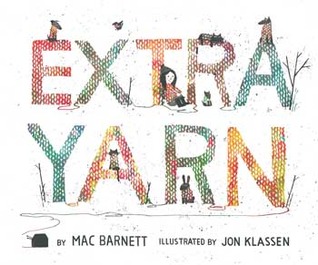
  • Extra Yarn, illustrated by Jon Klassen, written by Mac Barnett
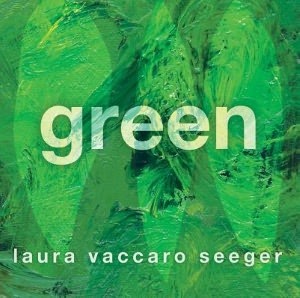
  • Green, illustrated and written by Laura Vaccaro Seeger
  • One Cool Friend, illustrated by David Small, written by Toni Buzzeo
  • Sleep Like a Tiger, illustrated by Pamela Zagarenski, written by Mary Logue


The responsibility falls on you to get a hold of these books if my library or the school library does not have some of them. 

To help you with this assignment, here are the criteria for selecting a Newbery and Caldecott award:
Newbery Criteria
Caldecott Criteria