For National Poetry Month, we will all be memorizing and performing a poem in front of the class.
Requirements:
Choose your own poem
Must be from a well-known, published poet
Must be at least 10 lines long
Must be approved by Mrs. Shaum by April 20th
You will be graded on how well you do the following:
Memorization
Vocal intonation and expression
Proper volume
Address and engage the audience
Finding the right poem
There are many poetry books in the classroom
The best Internet source for finding poems though is Poets.org
You MAY NOT choose a Shel Silverstein poem (there are so many other great poets out there! Explore and discover a new favorite!)
Ways to earn extra credit
Way #1
If you choose a poem that is 30 or more lines
Way #2
In addition to performing your own solo poem, work with a partner and perform a poem for two voices
Due Date:
We will be reciting our poems April 29th and 30th
If you don’t do well on your first try, you are welcome to try it again for a better grade
Some wisdom from Mrs. Shaum
Please make sure that you choose a poem that speaks to you and that you enjoy. If you just choose the first poem you find that’s 10 lines long and you don’t find anything fun or enjoyable about it, then that will show in your performance and you won’t do well. If you find a poem you like (even if it’s over 10 lines) then that will show through in your performance
Sunday, March 22, 2015

Wednesday, March 18, 2015
Research Notes Graphic Organizer - Example from Mrs. Shaum
Here is an example of how I would like you to fill out your research graphic organizer. You will do this for AT LEAST three pieces of information for your passion project. Remember though: if this topic is truly your passion, you will research as much as you can about it.
Resource information: author, title, webpage company, dates, etc. (Err on the side of more info, not less)
|
Directly Quote your research here
|
List main ideas using your own words
|
Paraphrase your research.
|
Website: Edutopia
Author: Rebecca Alber
Date: July 31, 2014
Article title: “Using Mentor Texts to Motivate and Support Writers”
URL: http://www.edutopia.org/blog/using-mentor-text-motivate-and-support-student-writers-rebecca-alber
|
“If we want students to do something well, it helps to both tell them and show them what we expect. When it comes to writing assignments, we teachers will give students directions to write a convincing essay or draft a descriptive narrative followed by telling them how to earn a good grade on it. Many of us also hand out a rubric or criteria chart that tells all the expectations for the essay. But, with all that there is to cover and the time crunch, we may sacrifice showing them mentor texts, examples of good writing.”
|
|
In the quest to “cover” curriculum, teachers often give students directions and hand them grading rubrics for writing assignments, but one of the things that is often missing from that equation is allowing students to examine examples of effective writing. If they don’t know what good writing looks or sounds like, then how do we expect them to write well? This is what mentor texts are for.
|
Monday, March 9, 2015
Plagiarism Article of the Week
1. After watching the video below, read this article.
2. Underline or highlight your confusion
3. Talk back to the text - Annotate the article with comments, questions, inferences, etc.
4. Write TWO developed paragraphs to AT LEAST three of the five prompts below. You MUST respond to the first prompt.
Writing prompts for Article of the Week:
2. Underline or highlight your confusion
3. Talk back to the text - Annotate the article with comments, questions, inferences, etc.
4. Write TWO developed paragraphs to AT LEAST three of the five prompts below. You MUST respond to the first prompt.
Writing prompts for Article of the Week:
In TWO well-developed paragraphs (introduce your topic, use evidence from the text, don’t repeat yourself just to get in an appropriate number of sentences), respond to the FIRST prompt and AT LEAST two of the other four (i.e., you can respond to more if you wish). So to sum up, you are responding to THREE of the five prompts.
- After watching the video and reading the article, write a short summary of your understanding of the situation.
- Why do you think the media is choosing to paint John Green as a hero when others who have plagiarized receive extremely harsh consequences or reactions from the public?
- What do you think the consequences for plagiarism should be?
- What does this situation make you think about the policies schools enforce about plagiarism? (Anywhere from failing grades to expulsion)
- What do you make of the author’s claim that Green didn’t apologize? Do actions speak louder than words in this case?
Tuesday, February 24, 2015
Revising your Caldecott Essay

Even if you received a good grade on your essay, there is always room for improvement, so I ask that everyone find a way to revise your essay.
Here are the steps you need to take to revise your essay:
1. Unsubmit your essay.
2. Review your grading sheet and comments
3. Make appropriate revisions
4. Resubmit your essay.
Most of you lost points in the referencing the Caldecott criteria. Remember: it's not enough to have an opinion; you have to back it up with relevant evidence. Most of you turned in a nice piece of writing, but when it came to actually following the directions of the assignment, you missed out.
Here are a few sentence starters that you can use to reference the criteria in your paper:
- According to...
- As it states in...
- It is written in...
- The Caldecott criteria states...
- The Caldecott committee is looking for...
And finally, as a reminder, here are the criteria again. Remember that the main criteria you will be using to judge your picture book worthy of winning are letters a through e.
*~*~*~*~*~*~*~*
The Randolph Caldecott Award seeks to find "The most distinguished American picture book for children."
But just what does distinguished mean?
Distinguished: (adjective) made noticeable by excellence; having an air of distinction or dignity
In making your decision you must keep this in mind: the Caldecott is awarded for illustration, not for text. You may only consider text only if it detracts from the illustration.
Here is the Caldecott critera from the ALSC website (I re-worded some of this to help you better understand the criteria):
-
In identifying a “distinguished American picture book for children,” defined as illustration, committee members need to consider :
-
Excellence of execution in the artistic technique used
-
Excellence of interpretation of story, theme, or concept through pictures
-
Appropriateness of style of illustration to the story, theme or concept;
-
Understanding of plot, theme, characters, setting, mood or information through the pictures;
-
Excellence of presentation in recognition of a child audience.
-
-
The only limitation to graphic form is that the form must be one which may be used in a picture book. The book cannot be dependent on other media (i.e., sound, film or computer program) for its enjoyment.
-
Each book is to be considered as a picture book. The committee is to make its decision primarily on the illustration, but other components of a book are to be considered especially when they make a book less effective as a children’s picture book. Such other components might include the written text, the overall design of the book, etc.
Monday, February 23, 2015
This is Not My Hat and the Caldecott criteria
In class today we studied the Caldecott criteria and applied it to the book This is Not My Hat by Jon Klassen, which won the 2013 Caldecott award.

Choose three of the criteria for #1 (a-e) and explain (on loose leaf) why and how This is Not My Hat meets these criteria.
The Randolph Caldecott Award seeks to find "The most distinguished American picture book for children."
But just what does distinguished mean?
Distinguished: (adjective) made noticeable by excellence; having an air of distinction or dignity
In making your decision you must keep this in mind: the Caldecott is awarded for illustration, not for text. You may only consider text only if it detracts from the illustration.
Here is the Caldecott critera from the ALSC website (I re-worded some of this to help you better understand the criteria):
-
In identifying a “distinguished American picture book for children,” defined as illustration, committee members need to consider :
-
Excellence of execution in the artistic technique used
-
Excellence of interpretation of story, theme, or concept through pictures
-
Appropriateness of style of illustration to the story, theme or concept;
-
Understanding of plot, theme, characters, setting, mood or information through the pictures;
-
Excellence of presentation in recognition of a child audience.
-
-
The only limitation to graphic form is that the form must be one which may be used in a picture book. The book cannot be dependent on other media (i.e., sound, film or computer program) for its enjoyment.
-
Each book is to be considered as a picture book. The committee is to make its decision primarily on the illustration, but other components of a book are to be considered especially when they make a book less effective as a children’s picture book. Such other components might include the written text, the overall design of the book, etc.
Wednesday, February 11, 2015
Just what the heck really happened at the end of Sam and Dave Dig a Hole?
My friend Travis Jonker wrote about 6 Theories on the Ending of Sam and Dave Dig a Hole.

What is your theory about what happened at the end of Sam and Dave Dig a Hole?
Answer this question in Google classroom for a chance to get some extra credit!
What is your theory about what happened at the end of Sam and Dave Dig a Hole?
Answer this question in Google classroom for a chance to get some extra credit!
Wednesday, February 4, 2015
Look at all the award-winning books we have read and talked about!
I feel so lucky that I was able to attend the ALA Youth Media Award ceremony in Chicago on Monday. If you want to watch it (at home), here is the recording on YouTube:
Or you can read the press release.
One thing struck me after the ALA Youth Media Award ceremony was over was how many of the award-winners we have read, talked about, or have in our classroom. Check it out:
YALSA Award for Excellence in Nonfiction for Young Adults (finalist):

The Port Chicago 50: Disaster, Mutiny, and the Fight for Civil Rights by Steve Sheinkin
Odyssey Honor (audiobook award):

A Snicker of Magic by Natalie Lloyd
Coretta Scott King Awards:
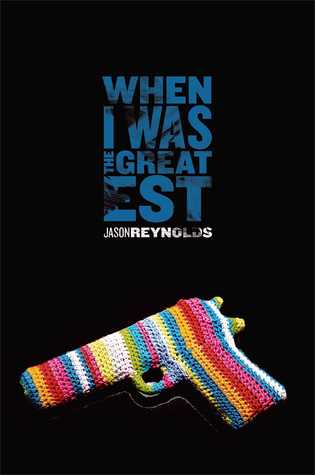
When I Was the Greatest by Jason Reynolds
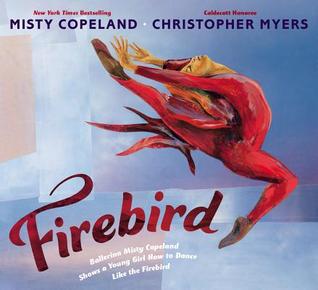
Firebird by Misty Copeland, illustrated by Christopher Myers
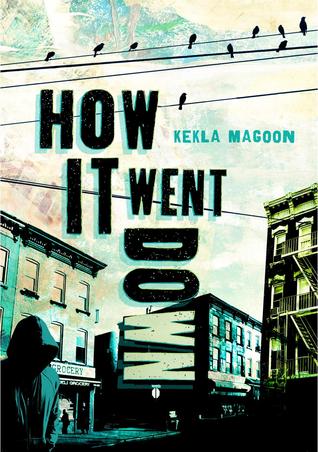
How It Went Down by Kekla Magoon
Caldecott
Honors:


Nana in the City by Lauren Castillo
Viva Frida by Yuyi Morales


The Noisy Paint Box by Barb Rosenstock, illustrated by Mary GrandPre
Sam and Dave Dig a Hole by Mac Barnett, illustrated by Jon Klassen
The Right Word: Roget and His Thesaurus by Jen Bryant, illustrated by Melissa Sweet
Caldecott Winner:
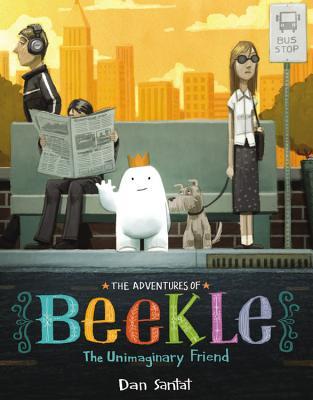
The Adventures of Beekle by Dan Santat
And finally, the Newbery...
Honors:
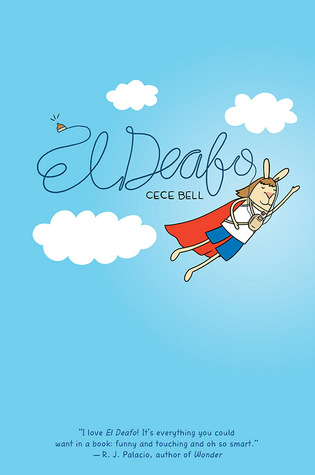
El Deafo by Cece Bell
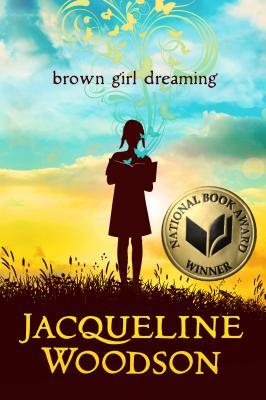
Brown Girl Dreaming by Jacqueline Woodson
Winner:
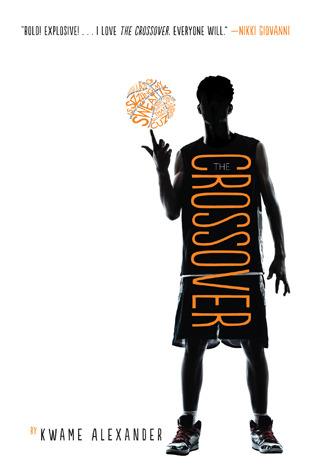
The Crossover by Kwame Alexander
Or you can read the press release.
One thing struck me after the ALA Youth Media Award ceremony was over was how many of the award-winners we have read, talked about, or have in our classroom. Check it out:
YALSA Award for Excellence in Nonfiction for Young Adults (finalist):
The Port Chicago 50: Disaster, Mutiny, and the Fight for Civil Rights by Steve Sheinkin
Odyssey Honor (audiobook award):
A Snicker of Magic by Natalie Lloyd
Coretta Scott King Awards:
When I Was the Greatest by Jason Reynolds
Firebird by Misty Copeland, illustrated by Christopher Myers
How It Went Down by Kekla Magoon
Caldecott
Honors:
Nana in the City by Lauren Castillo
Viva Frida by Yuyi Morales
The Noisy Paint Box by Barb Rosenstock, illustrated by Mary GrandPre
Sam and Dave Dig a Hole by Mac Barnett, illustrated by Jon Klassen
The Right Word: Roget and His Thesaurus by Jen Bryant, illustrated by Melissa Sweet
Caldecott Winner:
The Adventures of Beekle by Dan Santat
And finally, the Newbery...
Honors:
El Deafo by Cece Bell
Brown Girl Dreaming by Jacqueline Woodson
Winner:
The Crossover by Kwame Alexander
Subscribe to:
Posts (Atom)